

For professional drivers with a family at home, the job is never just about the miles. It is about whether you will make it to your kid’s game on Friday, whether your spouse can count on you being there for the hard days, and whether the paycheck is steady enough to cover what matters. These are not soft concerns — they are the factors that determine whether a driving career is sustainable long term or whether it slowly costs you more than it pays.
The good news is that not all driving jobs are structured the same way. There are positions built around predictable schedules, consistent home time, and benefits packages that actually support a household. The challenge is knowing which job types deliver on those things and which ones only promise them in a job listing.
This article breaks down the driving positions that tend to work best for drivers with families, and what to look for when evaluating an opportunity.
Why Job Structure Matters More Than Base Pay
When you are supporting a family, gross pay is only one part of the equation. A high-mileage OTR position might post the biggest annual number, but it often comes with 250 or more nights away from home per year. For many drivers with young children or a partner who works, that tradeoff does not hold up over time.
What tends to matter more for family stability is predictability. Knowing when you will be home, what your schedule looks like week to week, and how much you will net after expenses gives a household something to plan around. Unpredictable dispatch, irregular hours, and last-minute schedule changes are some of the most common reasons drivers with families leave otherwise well-paying positions.
Structure, consistency, and home time are the real criteria. Pay matters, but it cannot be evaluated in isolation.
Home Daily Positions
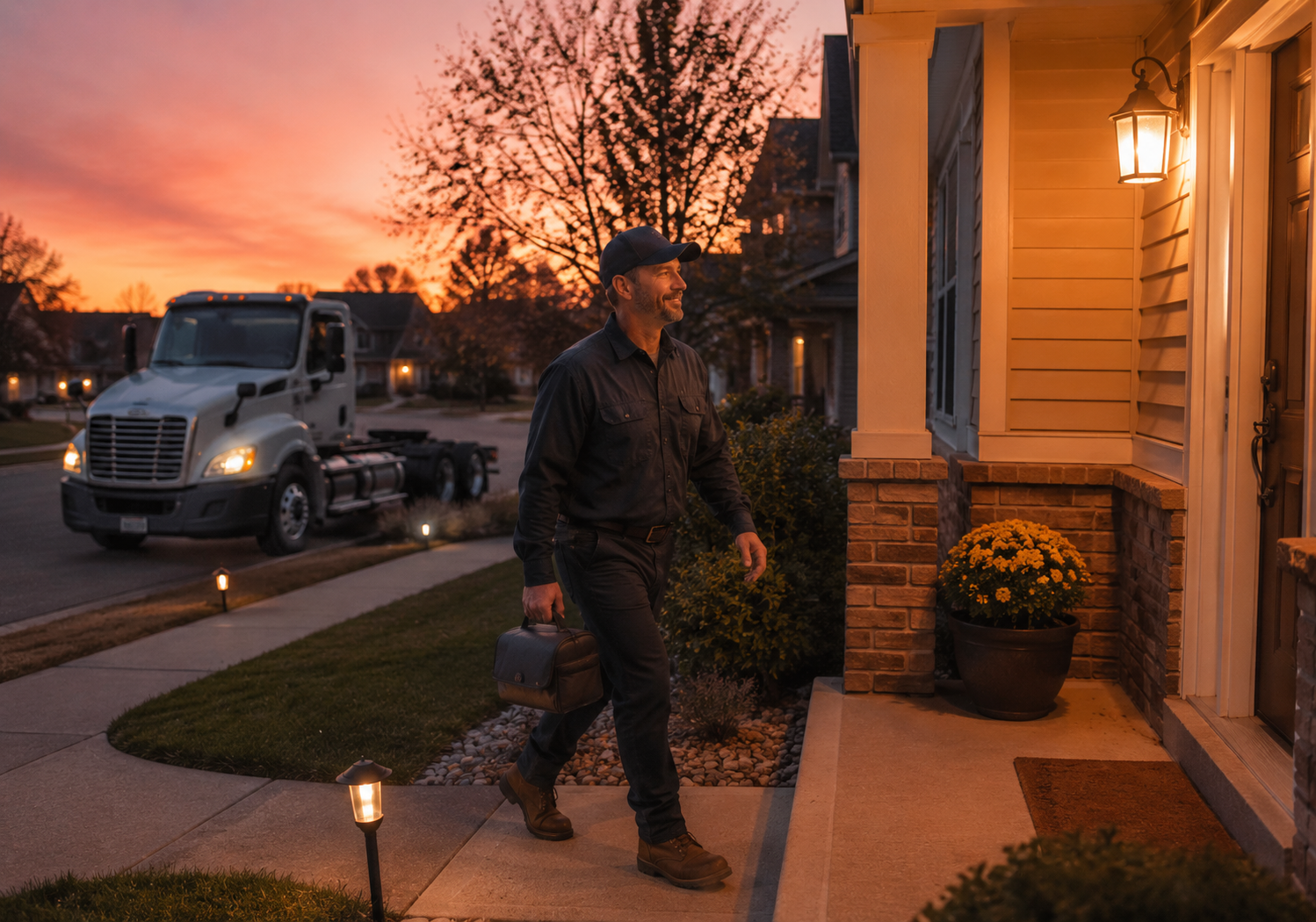
Home daily jobs are the clearest match for drivers who prioritize family life. These routes typically operate within a defined radius — often 150 to 200 miles from the terminal — and drivers return to their home base at the end of each shift. There is no layover pay, no hotel stays, and no guessing about when you will pull into your driveway.
Local delivery and last-mile freight are common examples. Furniture delivery, appliance runs, and home delivery routes frequently fall into this category. The tradeoff is that these positions may pay less per mile than regional or OTR work, and they can involve more physical unloading depending on the freight type. However, for drivers who value being home every night, the consistency is worth the difference.
If this type of schedule is your priority, it helps to understand exactly what qualifies a route as “home daily” before accepting a position. Not every carrier that uses that phrase means the same thing. This breakdown of what makes a trucking job truly home daily covers what to ask and what to watch for when evaluating these roles.
Local and Regional Routes
Local routes generally keep drivers within a single metro area or a tight geographic zone. These are ideal for drivers who want to be home every night and can tolerate urban traffic patterns, tight delivery windows, and frequent stops.
Regional routes extend that range — typically covering a multi-state area within a day’s drive of a home terminal. Drivers on regional runs may spend one or two nights per week away from home, depending on the lane structure, but they are usually back within a predictable window. For drivers who are comfortable with occasional overnights in exchange for slightly higher pay, regional work often strikes the right balance.
The decision between local and regional comes down to what your household can work around. A direct comparison of local vs. regional trucking jobs is worth reading before making that call, especially if you are weighing pay differences against the value of an extra night home each week.
Dedicated Routes
Dedicated positions assign a driver to a specific customer, lane, or freight account. Instead of being dispatched wherever freight is available on a given day, you run the same routes on a set schedule week after week.
For drivers with families, this structure has real advantages. You know in advance when you are working, how long each run takes, and when you will be back. Some dedicated accounts are home daily; others involve a predictable overnight pattern. Either way, the consistency is a significant improvement over irregular dispatch.
Dedicated positions are common in retail distribution, automotive parts supply chains, and consumer goods freight. They tend to be offered by larger carriers or through direct shipper relationships, and drivers with clean records and stable employment history are typically competitive candidates for these slots.
Over-the-Road: When It Still Makes Sense
OTR work is often framed as incompatible with family life, and for many drivers, that is accurate. But there are situations where it still makes sense — particularly for drivers who are actively building savings, paying down debt, or working through a period where maximizing income matters more than home time.
If you are going to run OTR with a family at home, structure and communication become even more important. Carriers that offer consistent home time windows — rather than vague promises of “home every two to three weeks” — are worth seeking out. The difference between a dispatcher who respects your reset window and one who consistently pushes it back is the difference between a manageable stretch and a situation that erodes your household.
According to the U.S. Bureau of Labor Statistics, the median annual wage for heavy and tractor-trailer truck drivers sits above $54,000, with experienced drivers and specialized freight positions earning considerably more. For OTR drivers who run hard and manage expenses, that ceiling can climb. But the personal cost needs to be calculated honestly before committing.
Benefits That Directly Affect a Family
Pay aside, the benefits a carrier offers have a direct impact on a family’s financial security. Health insurance is the most obvious — a plan with reasonable premiums, a workable deductible, and coverage that extends to dependents is not optional when children are involved. Life insurance, disability coverage, and a retirement plan with employer matching are also worth examining before accepting a position.
Some carriers offer additional support that matters specifically for drivers with families: flexible scheduling for personal days, consistent home time guarantees written into the offer, and paid time off that can actually be scheduled rather than just theoretically available.
When evaluating an offer, read the benefits package carefully. A $0.02 per mile difference in pay can easily be offset by a worse health plan or the absence of a 401(k) match.

What to Ask Before Accepting a Position
Drivers with families should treat the job offer as a two-way evaluation. Before signing on with any carrier, it is worth getting clear answers to the following:
- What does a typical week look like for this position? Not the best-case week — the average one.
- How is dispatch handled on weekends? Are drivers expected to be available, or is the schedule fixed?
- What happens if a family emergency comes up mid-run? How does the company handle that?
- What is the actual home time record for drivers currently in this role? Not what is promised — what drivers report.
These questions are not aggressive or unreasonable. A carrier that has honest, straightforward answers is a better sign than one that redirects to compensation numbers every time you try to discuss schedule.
The Long View
Driving professionally is a career that can provide well for a family over time. The drivers who sustain it over the long haul tend to be the ones who chose positions that fit their actual life — not just positions that paid the most on paper or sounded best in a recruiter’s pitch.
Finding the right type of run, with a carrier that runs an honest operation and supports drivers consistently, is worth the patience required to find it.
If you are a licensed CDL driver looking for positions that offer consistent home time and a benefits package built for the long term, explore what Rapid Response has available. The opportunities listed on our jobs page are structured around real schedules, and our team is available to answer questions about what daily operations actually look like before you make a decision.